Building instead of subscribing
Many times I've thought about how nice it would be to just buy things again. This isn't an original thought, many people will have said those same words again and again around the table over dinner. But it still rings true no matter what.
I had such a thought again semi-recently. Thinking about a future where I have to deliberate over whether I should subscribe to Microsoft Office again, download LibreOffice, or make do with Google Docs. All (except Libre) are undoubtedly obtaining data from me for profit whilst offering ever-worsening products.
AI stumbles into the scene
AI has been an interesting time to be involved in the tech scene. We see large corporations rush headlong into what feels like the latest goldrush. But what is interesting, and I don't think the average person has tapped into it yet, is the newfound ability for anyone to build their own local software.
I already touched on word processors, so I'll continue. When I was having this thought around subscriptions I thought 'how long would it take to build something like Google Docs?' Granted, I'm not talking about full functionality, and it's not to dismiss the hard work developers have put into Google Docs over the years. But, nonetheless, it's an interesting question. Why consider multiple subscriptions to software full of functionality I won't use when I can throw together a somewhat close approximation?
It would be similar to giving a young Warhammer obsessed child a 3D printer.
But we have x at home
So I got started.
I decided I wanted to prepare for a platform, not just one tool. If I was going to do this then I would prepare for how to manage multiple tools. Or at least prepare for how to scale.
So I decided I needed a central landing UI. This I call 'Harbour'. Harbour uses Docker as an orchestration tool, and where Docker uses the idea of containers on a docking ship, Harbour uses the idea of an unspecified number of ships (apps) loading, unloading, or otherwise plugging into it.
It would have:
- a central database and common service/UI that could add users and allocate permissions to use any of these docked apps
- authentication baked into the common service so users must authenticate to use it, but only once
- the apps can share between users too, after all, it's for local home network
The potential started to open up to me. Home cloud, docs, shared notes (which is for some reason a hard app to find), recipes. I could do these as needed/wanted and just plug a new one in whenever.
With that being said, I started with a word processor...
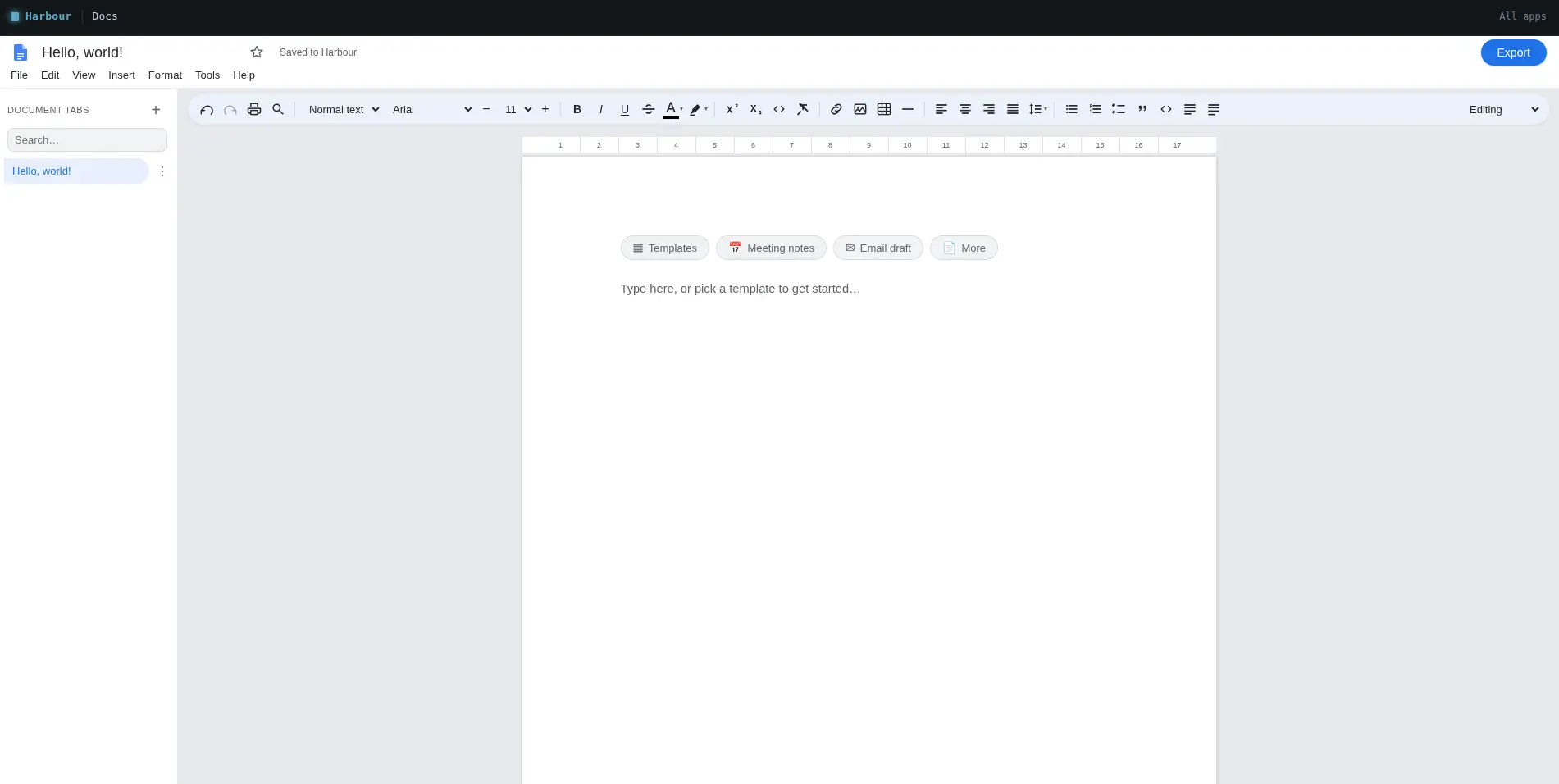
I find it hard to argue with the results of a couple decent prompts. With Harbour Docs, I can have spell-checking, .DOCX and .PDF support, formatting abilities and generally the basic functionality of Google Docs at this point.
We can keep going
It wasn't enough to stop with the word processor. I continued on, 'why not Confluence or Notion?' I thought to myself.
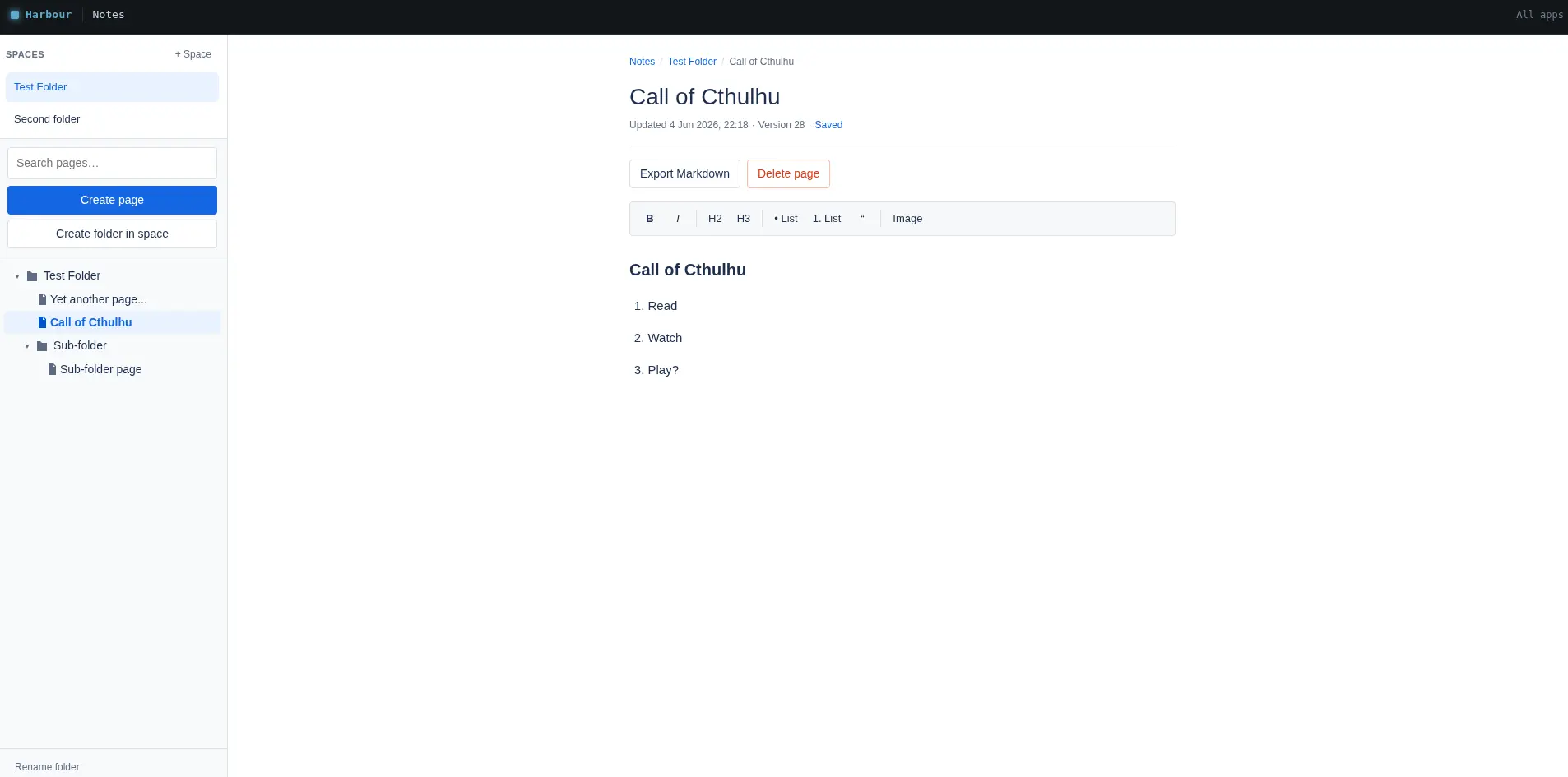
Admittedly it's a lot more barebones than the word processor, but we're trying it out. It gives output in markdown, something Confluence doesn't do, probably because it makes moving documents out of it easier. So we essentially have a rich-text editor for markdown that stores on the Harbour platform now.
Next up was a take on cloud storage, but I opted to call it 'Warehouse'. This felt more appropriate for a harbour theme.
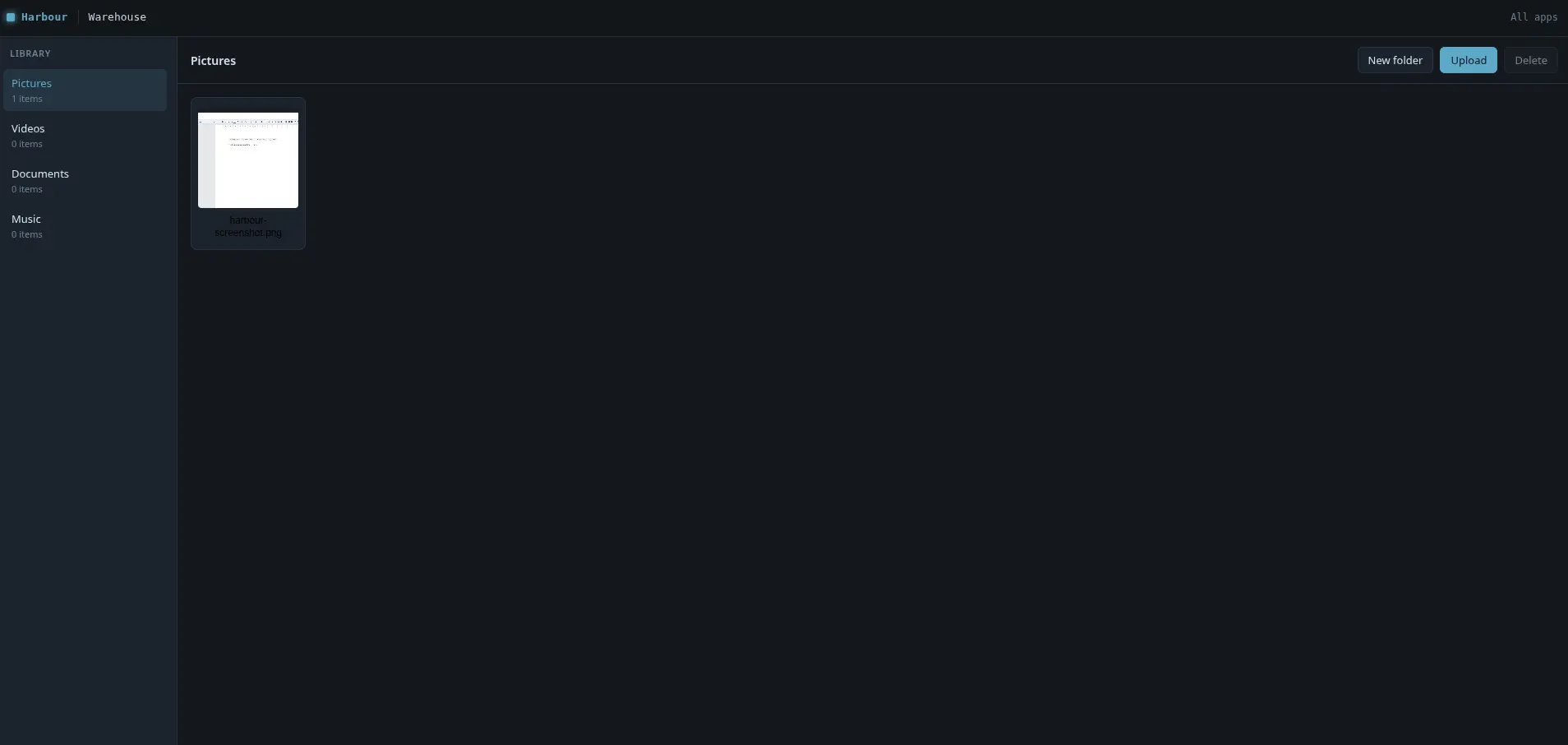
Getting a bit carried away at this point
What I have ended up with (for now) is a whole list of applications that whilst sparse on in-depth functionality, are projects to continue refining specifically for whatever I need them for. All closed within my home. Yes, I know selfhosting isn't anything new.
At a high-level, the Harbour platform now looks like this:
So why bother?
Yes, yes it is. But now so am I. The saying "If you aren't paying for the product, you are the product" has truth to it. And the truth is I don't know how I am the product in this case. My usage data, my content, spiralling Google storage usage to get me to buy more?
Of course there's still LibreOffice, and I do use it too. But the temptation of having a personal application platform was probably going to win me over at some point even without the negatives of consumerism.
Now, instead of many subscription services, I can just pay for one with AI.
I'll include more posts in the future on the Harbour setup as it continues to develop.